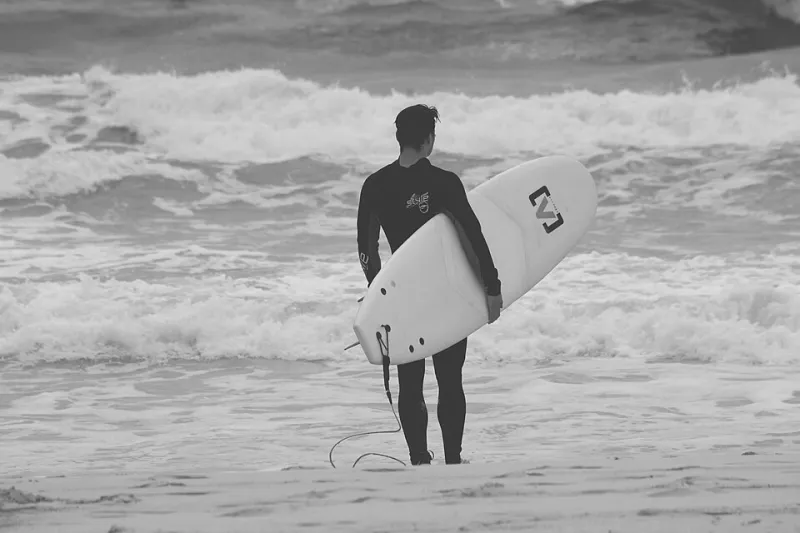
Salt in the Blood: What Keeps Surfers Returning to Polzeath Season After Season
Photo: Kgbo, CC BY-SA 4.0, via Wikimedia Commons
There's a particular feeling that hits you somewhere around the A39, when the hedgerows start closing in and the road begins its winding descent towards the coast. If you've made this drive before — and chances are, if you're reading this, you have — you'll know exactly what it is. Something loosens in your chest. Your shoulders drop. You haven't even seen the sea yet, but you already know it's there.
For a remarkable number of UK surfers, Polzeath has become that place. Not just a holiday destination, but a kind of compass point. The place they measure other places against. The place they come back to, year after year, sometimes decade after decade, in a way that starts to feel less like tourism and more like something closer to pilgrimage.
But why here? Cornwall has no shortage of surf breaks. Wales has its devotees. Scotland's north coast has been drawing a certain breed of wave-hunter for years. So what is it about this particular stretch of north Cornwall — this wide, west-facing bay with its reliable lefts and its cheerful chaos — that creates such fierce, enduring loyalty?
The First Time Stays With You
Ask almost anyone who keeps coming back to Polzeath when they first came, and the answer tends to arrive with a specific kind of smile. "I was fourteen," says Mark, a PE teacher from Bristol who's been making the trip every summer for over twenty years. "My parents rented a cottage up the hill. I'd never surfed in my life. By day three I was absolutely hooked, and I think some part of my brain just filed Polzeath under 'where good things happen' and never let it go."
That early imprinting matters more than people realise. Polzeath has long been a destination for family holidays — accessible from most of England in a day's drive, manageable for beginners, safe enough for nervous parents — which means a huge proportion of the UK's recreational surf community had their first proper wave here. The beach didn't just teach them to surf. It became the emotional backdrop for a formative experience, and those associations don't fade easily.
Local surf instructor Jenna, who's been teaching at Polzeath for over a decade, sees it play out constantly. "I get people in their thirties and forties coming back for lessons who surfed here as teenagers. They'll say things like, 'I just want to feel that again.' It's not really about the waves, is it? It's about who they were when they first caught them."
What the Beach Actually Offers
Sentimentality aside, Polzeath does have genuine, practical appeal that holds up to scrutiny. The bay faces west-northwest, which means it picks up Atlantic swell reliably across a long season. The beach break produces waves that work for a wide range of abilities — forgiving enough for learners on the inside, with enough shape and power on a decent swell to keep more experienced surfers engaged. It's rarely the most challenging water in Cornwall, but it's consistently surfable in a way that matters enormously to people who've driven four hours to get there.
The tidal range is significant, which means the beach transforms throughout the day — a full tide can feel like a completely different spot from low water, which gives regulars something to read and understand over time. That kind of local knowledge becomes its own reward. You start to know when to paddle out, where to position yourself, which way the rip tends to pull. The beach teaches you things, and learning them feels like being let in on a secret.
Community as Anchor
Beyond the waves themselves, there's something about the social fabric of Polzeath that seems to hold people. It's a small village, and repeat visitors tend to fall into its rhythms quickly. The same faces reappear in the car park. The same conversations happen at the water's edge. There's a loose, seasonal community here — part local, part returning visitor — that has its own unspoken rules and its own warmth.
"It sounds strange to say you have mates in a place you only visit for two weeks a year," admits Clare, who's been bringing her family to Polzeath every August from their home in the Midlands. "But we genuinely do. We've watched each other's kids grow up in the surf. That doesn't happen in many places."
The surf schools contribute to this too. Several have been operating here long enough to have taught multiple generations of the same families, creating a continuity that feels increasingly rare in modern tourism. Instructors remember returning students. Regulars get treated like regulars. In an era when so much of travel has become transactional and anonymous, that recognition means something.
The Mythology of the Place
Polzeath has also, over the years, acquired a kind of mythology — a reputation that precedes it and shapes the experience of arriving. It's been written about, photographed, and quietly celebrated in the UK surf press for long enough that coming here for the first time feels like visiting somewhere you already half-know. For returning visitors, that mythology deepens with each trip, layered over by their own memories until the place becomes genuinely personal.
There's a line you hear occasionally from long-timers: "Polzeath is what surfing in the UK is supposed to feel like." It's a slightly grandiose claim, but it gets at something real. The beach doesn't pretend to be somewhere it isn't. It's not trying to compete with Hossegor or Jeffreys Bay. It's a British surf beach, in the best possible sense — slightly windswept, occasionally chaotic, full of learners and longboarders and kids shrieking in the shallows, with a backdrop of green headlands and the particular grey-blue of the Atlantic on a cloudy afternoon. It has its own aesthetic, and people love it for exactly that.
Why They Come Back
If you pressed people for the real answer — past the waves, past the community, past the nostalgia — most would probably say something about how Polzeath makes them feel. Simpler. Less cluttered. More present. It's the effect that good coastline tends to have on people, amplified here by familiarity and repetition until the place has become genuinely restorative in a way that's hard to explain to someone who hasn't experienced it.
"I've been to better surf spots," Mark admits, before catching himself. "Actually, I'm not sure that's even true. But I've been to more dramatic ones, let's say. Places with bigger waves or more exotic settings. And I always end up back here. I think because here I'm not trying to impress anyone, including myself. I'm just surfing. And that's what I came for."
That, in the end, might be Polzeath's real gift. Not the best waves in Britain, not the most photogenic bay, not the most undiscovered gem. Just a place that has, for a lot of people, become the truest version of what a surf trip is supposed to be. And once a place gets its hooks in you like that, you tend to keep coming back.
See you in the car park.