From Weekend Tripper to Year-Round Regular: The Pull That Keeps Surfers Rooted in Polzeath
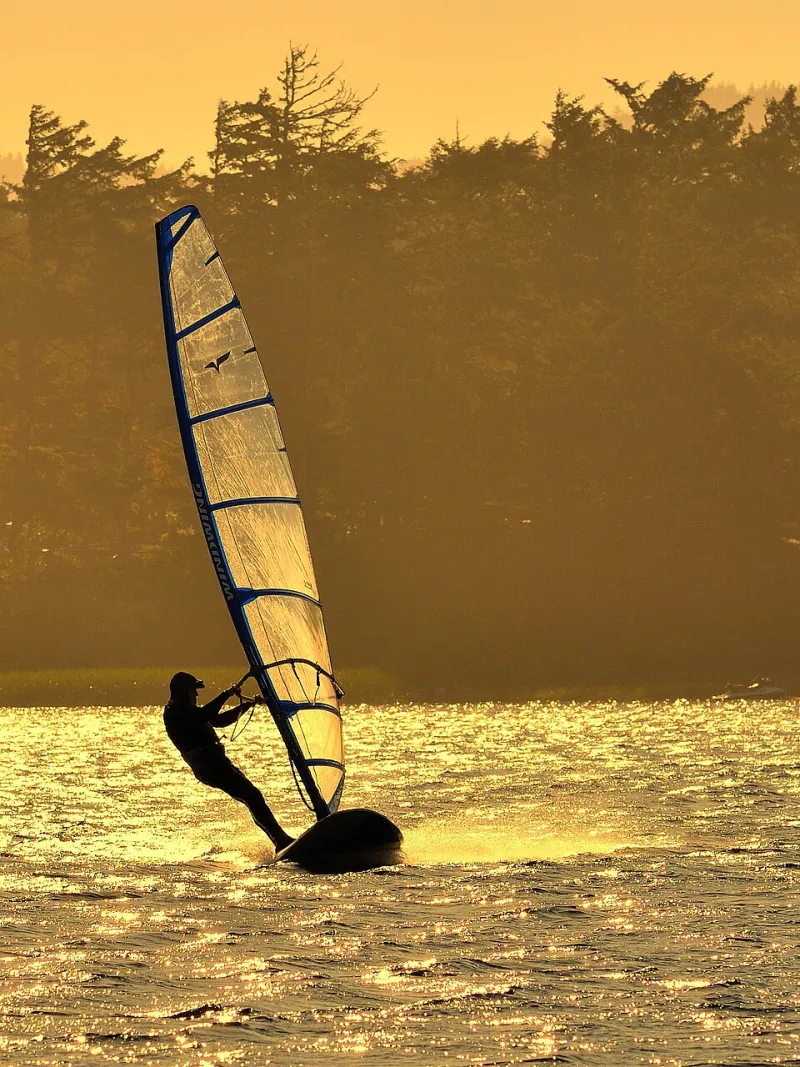
Photo: Frank Price Bureau of Land Management Oregon and Washington from Portland, America, Public domain, via Wikimedia Commons
It usually starts with a bank holiday weekend. Someone packs the boot with wetsuits, a body board for the kids, and a bag of groceries they'll never quite finish. They drive down the A30, hit the coast road, and catch that first glimpse of the Camel Estuary glinting in the afternoon light. And something shifts.
For plenty of British surfers, that's where the story ends — a lovely few days, a satisfying drive home, a vague promise to come back next summer. But for a quietly growing number of people, that first trip to Polzeath is less a holiday and more the beginning of something they didn't plan for.
The Moment It Stops Being a Holiday
Talk to almost anyone who's made Polzeath a genuine fixture in their life, and they'll struggle to pinpoint exactly when the shift happened. It tends to be gradual. A second visit. A third. Booking accommodation before the previous trip has even ended. Knowing which car park fills up fastest on a Saturday morning and which café does the best flat white before a dawn session.
That accumulation of local knowledge — the stuff that takes years to build anywhere — is part of what makes the attachment so sticky. Polzeath is small enough that you can actually learn it. The beach faces north-northwest, which means the swell lines up cleanly when Atlantic storms push through. The sand bar shifts between seasons, so where you paddle out in October isn't necessarily where you'd go in April. Regulars know this. Tourists don't. And knowing it feels like belonging.
There's also the sheer consistency of the place. Polzeath doesn't try to be anything other than what it is: a compact, unpretentious Cornish surf village with a great beach, a handful of decent places to eat, and more van-dwelling surfers per square mile than almost anywhere else in the country. That lack of ambition, paradoxically, is exactly what keeps drawing people back.
The Psychology of Coastal Relocation
Researchers have long noted the psychological effects of proximity to the ocean — lower stress levels, improved wellbeing, a measurable sense of calm that's difficult to replicate inland. But for surfers, the pull goes deeper than blue space theory. Surfing in a place like Polzeath isn't passive. It demands presence. You can't be checking your phone or running through a to-do list while you're reading a set and deciding whether to commit. The ocean forces a kind of mindfulness that most people struggle to manufacture any other way.
For professionals living in Bristol, London, or Manchester — people whose working weeks are dense with screens and meetings and the low hum of urban pressure — that enforced presence is almost medicinal. And once you've experienced it regularly enough, the idea of going three or four months without it starts to feel like a genuine deprivation.
Polzeath becomes, for these people, less a place they go to and more a state they return to. The village is the container for that feeling. And containers, once you've found a good one, are hard to give up.
What the Community Actually Looks Like
It would be easy to romanticise this — to paint Polzeath as some kind of surf utopia where everyone's permanently stoked and the sunsets never disappoint. The reality is more textured than that.
The community of regulars and long-termers is genuinely mixed. There are families who started coming in the nineties when the kids were small and now come back with grandchildren. There are forty-something surfers who bought a modest place in the early 2000s before prices went stratospheric and now spend more time here than anywhere else. There are younger people who arrived for a season of surf instruction and quietly decided the season didn't need to end.
What they tend to share isn't a demographic profile or a particular income bracket. It's more of an orientation — a preference for tides over timetables, for the rhythm of swell forecasts over the rhythm of office calendars. Polzeath attracts people who've decided, consciously or not, that the quality of their leisure time matters more than its convenience.
The Tension Beneath the Surface
It's worth being honest about the complications that come with all this affection. Polzeath, like much of coastal Cornwall, is caught in a genuine tension between the people who love it enough to keep coming back and the people who actually live there year-round.
Holiday lets and second homes have driven property prices to levels that make permanent residency increasingly difficult for local families. The very desirability that makes the village so compelling to outsiders is part of what's making it harder to sustain as a working community. That's not a reason to feel guilty about loving the place — but it is a reason to engage with it thoughtfully, to spend money locally, to support independent businesses rather than just treating the village as a backdrop for your own experience.
The surfers who've made Polzeath genuinely their own tend to understand this intuitively. They're not extracting something from the village; they're investing in it. They know the names of the people who run the surf school. They turn up to the beach clean-ups. They recommend the place to friends with the honest caveat that it's better when you're not treating it as a theme park.
Why It's Different From Just Liking the Beach
There are plenty of beautiful beaches in Britain. Croyde, Saunton, Fistral, Sennen — any of them could, on paper, offer what Polzeath offers. And yet the pilgrimage keeps returning here.
Part of it is the geography — the way the bay curves, the relative shelter from southerly winds, the estuary light that does something peculiar and golden in the evenings. Part of it is critical mass; once enough people with a certain sensibility congregate somewhere regularly, the place takes on a character that compounds itself. You come because the waves are good. You stay because the waves are good and you keep running into people who get it.
But mostly, it's about what Polzeath asks of you. It asks you to slow down. To watch the water before you paddle out. To accept that some days the sea won't cooperate and that's fine, actually — sit on the sand, drink your coffee, watch someone else get it wrong on a closeout set. There's a version of the good life being quietly modelled here, and once you've seen it up close, it's genuinely hard to unsee.
That's why people keep coming back. And why, for more and more of them, coming back eventually starts to feel like coming home.