Live Here, Work Here, But Can You Afford Here? The Housing Crisis Quietly Breaking Polzeath

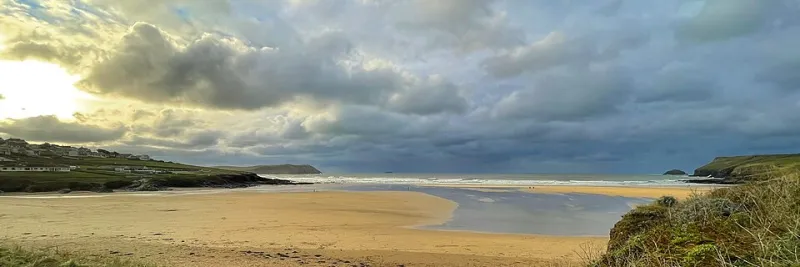
Photo by Photo by Karen Uppal on Unsplash on Unsplash
Polzeath looks the part. The beach is stunning, the waves are reliable, and the village hums with the kind of easy, salt-washed energy that makes you want to book another week. But spend a bit longer here — talk to the people behind the counter, the ones carrying boards down to the waterline at 8am, the kitchen staff who stay after the last table clears — and a very different picture starts to emerge.
The village has a problem. And it's not the car park.
The Maths Simply Don't Work Anymore
Rental prices in and around Polzeath have climbed steeply over the past five years. Short-term holiday let platforms — Airbnb chief among them — have turned what were once modest long-term rentals into premium weekly bookings. A two-bedroom cottage that might have rented for £700 a month to a local family can now generate that in a single weekend during August. For landlords, it's an obvious call. For the people who actually live and work here year-round, it's a slow disaster.
According to data from Rightmove and local estate agents, average asking rents for long-term lets in the Rock and Polzeath area have increased by over 40% since 2019. Meanwhile, wages in hospitality, retail, and surf instruction — the backbone of Polzeath's economy — have barely kept pace with inflation. The gap between what local workers earn and what local housing costs has become, for many, simply unbridgeable.
"I was born in Wadebridge, I grew up surfing this beach," says Jamie, 28, who works as a surf instructor for one of the village's established schools. "Two years ago I had to move back in with my parents because my landlord switched the house I was renting to holiday lets. I've been looking ever since. There's just nothing. Not at a price I can actually pay."
The Seasonal Squeeze
The problem is made worse by the nature of Polzeath's economy. Most work here is seasonal — or at least heavily weighted toward the summer months. That means workers face a double bind: during the summer, when wages are at their best, rental availability drops to near zero as every spare room and cottage gets snapped up by holidaymakers. Come October, availability creeps back up, but so does the financial pressure of surviving a quieter winter.
Some workers have adapted by house-sharing in ways that would raise eyebrows in a city. Three or four adults splitting a two-bedroom flat is not unusual. Others commute from Wadebridge, Camelford, or even further afield — adding an hour or more to already long shifts.
"I drive in from Bodmin," says Carly, who manages front-of-house at a café near the beach. "It's forty minutes each way. I don't mind it in summer but in winter, on dark mornings, it wears you down. I'd love to live closer but there's nothing I can rent that makes financial sense."
For business owners, the knock-on effects are significant. High staff turnover, difficulty recruiting, and a growing reliance on seasonal workers from outside the area are becoming the norm. Several shop and café owners we spoke to described the struggle to maintain consistency when the people who know the place, the regulars, the rhythms of the village, keep having to leave.
A Village That Eats Itself
"There's a real irony here," says one long-standing local business owner who asked not to be named. "The thing that makes Polzeath special — the authentic community, the local knowledge, the genuine surf culture — is being hollowed out by the very popularity that attracts visitors in the first place. You can't have one without the other, but right now we're choosing the money over the people."
It's a tension playing out across coastal Cornwall, not just here. St Ives, Port Isaac, and Padstow have all faced similar pressures. Cornwall Council has introduced planning rules requiring change-of-use permission to convert a primary residence into a short-term holiday let — a move welcomed by housing campaigners but one that critics say is too limited in scope and too slow to enforce.
In Polzeath specifically, the proportion of homes used as holiday lets is estimated to be among the highest in North Cornwall. Walk through the village on a Tuesday morning in November and you'll find half the properties shuttered, curtains drawn, waiting for next season. The lights aren't on because nobody lives there.
What Would It Actually Take to Fix This?
There's no simple answer, and anyone who tells you otherwise is probably trying to sell you something. But the people most affected by this crisis have some clear ideas.
A ring-fenced supply of affordable long-term rental properties — either through council intervention or community land trust models — is frequently cited. Several community land trusts are already operating in rural Cornwall, offering below-market rents tied to local employment. Campaigners argue that Polzeath and the surrounding area is precisely the kind of place such a model should be applied.
Better transport links would also help. If workers can't afford to live in the village, at least making it easier and cheaper to get there from Wadebridge or Bodmin would reduce the daily grind. The rural bus services connecting North Cornwall's villages are, to put it diplomatically, not exactly a selling point.
Some locals have called for a formal cap on the number of short-term lets permitted in a defined area — a model trialled in parts of Edinburgh and Amsterdam. It's a politically contentious idea, and one that pits property owners' rights against community need. But it's a conversation that feels increasingly unavoidable.
The Human Cost Behind the Holiday Brochure
Polzeath is a genuinely wonderful place. That's not in question. The beach is as good as any in Britain, the surf community has real depth and warmth, and the village has a character that's hard to fake. But character is built by people — by the families who've been here for generations, the young surfers who grew up on this break, the café owners who remember your order.
When those people can no longer afford to stay, something essential leaves with them. What remains is a beautiful stage set, expertly maintained for visitors who'll be gone by Sunday evening.
Polzeath doesn't have to become that. But right now, the trajectory is worrying — and the people paying the highest price are the ones you'll never see mentioned in the holiday listings.