Small Village, Big Numbers: How Polzeath Became One of Cornwall's Most Valuable Surf Destinations
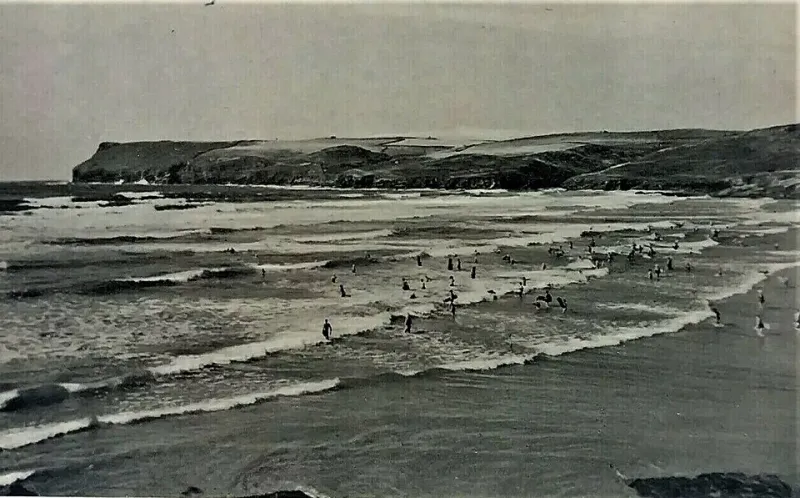
Photo: Mark Crombie, Public domain, via Wikimedia Commons
Drive into Polzeath on a grey Tuesday in October and you might wonder what all the fuss is about. A handful of surf shops. A car park that's half empty. Seagulls doing their thing. It's quiet, compact, and — at first glance — entirely unremarkable in scale.
But look a little closer at the economics, and the picture shifts dramatically. Polzeath, a village with a permanent population that wouldn't fill a modest secondary school, generates tourism revenue that most Cornish towns three times its size would envy. It attracts repeat visitors with unusual loyalty, commands accommodation rates that rival parts of Devon and Dorset, and has built a cultural identity that resonates far beyond the county border.
So how does it do it?
The Numbers Behind the Hype
Cornwall as a whole welcomed around five million visitors in 2023, contributing roughly £2.6 billion to the local economy. Polzeath doesn't publish its own tourism figures — it's too small to be tracked independently — but local business owners are happy to talk, and the picture that emerges is striking.
"We're fully booked from late May through to the end of September, and we're turning people away most weekends in April and October too," says the owner of one of Polzeath's most established surf hire operations, who asked not to be named. "The demand has shifted. It used to be July and August only. Now we've got a much longer season, and the spend per visitor has gone up considerably."
Accommodation rates back this up. A week in a well-positioned Polzeath holiday let during peak summer typically runs between £2,000 and £4,500, depending on size and proximity to the beach. Comparable properties in nearby St Minver or Trebetherick — both pleasant enough — often come in 20 to 30 per cent lower. The Polzeath postcode commands a premium, and visitors are paying it without much complaint.
Why Polzeath, Specifically?
The honest answer involves a combination of geography, timing, and a bit of good fortune.
The beach itself is genuinely excellent — a wide, sandy bay with a reliable left-hand break that works across a range of swell conditions and tide states. It's learner-friendly without being boring for intermediate surfers, which means it draws a remarkably broad demographic. Families with young kids share the water with post-university groups and middle-aged surfers who've been coming since the nineties. That breadth of appeal is commercially significant.
"We don't just get the hardcore surf crowd," explains one local café owner who's been trading in the village for over a decade. "We get people who've never surfed in their lives but wanted to try it somewhere that felt safe and well set-up. And then they come back. That's the bit people underestimate — the return rate here is extraordinary."
Repeat visitors are the backbone of Polzeath's economy. Unlike day-tripper destinations that rely on high footfall and low average spend, Polzeath attracts people who stay for several nights, eat locally, hire equipment, book lessons, and then do it all again the following year. The village has, in effect, built a loyal customer base that many businesses would kill for.
The Ripple Effect Across the Region
Polzeath's success doesn't stay within the village limits. Visitors who base themselves here regularly venture out to Rock (a short ferry ride across the Camel Estuary), Padstow (fifteen minutes by car), and Wadebridge (the nearest market town). Spending that originates in Polzeath frequently ends up distributed across a ten-mile radius.
Local taxi drivers, food suppliers, surf instructors who travel between beaches, and tradespeople who maintain the holiday lets all benefit from the village's pulling power. One Wadebridge-based surf school owner told us that Polzeath referrals account for a meaningful chunk of his bookings — visitors who want a slightly different experience on a different day, but who first arrived in the area because of Polzeath's reputation.
"It's like a gateway," he said. "People come for Polzeath, and then they discover the whole North Cornwall coast. We all benefit from that."
Accommodation: The Real Engine Room
If surf hire and lessons are the visible face of Polzeath's tourism economy, accommodation is where the real money moves. The village and its immediate surrounds contain a dense concentration of holiday lets — a mix of converted farmhouses, modern builds, and older bungalows that have been upgraded over the years to meet rising expectations.
The shift towards quality has been deliberate. Visitors who are spending serious money on a week's stay increasingly expect decent kitchens, reliable Wi-Fi, and outdoor space. Owners who've invested in their properties are seeing the returns — not just in higher nightly rates, but in the five-star reviews that drive bookings twelve months in advance.
"I had people book for next August before this August was even over," says one Polzeath property owner who manages two lets near the beach. "That kind of forward demand is unusual. It tells you something about how attached people get to this place."
That attachment — emotional as much as practical — is perhaps Polzeath's most underrated economic asset. People don't just book here because it's convenient. They book here because it means something to them.
The Cultural Currency
Beyond the raw spending figures, Polzeath has accumulated a kind of cultural capital that translates into economic value in ways that are harder to quantify but no less real.
It appears regularly in surf media, travel supplements, and social content. It has an aesthetic identity — the slate cliffs, the particular quality of the Atlantic light, the low-key village vibe — that photographs well and travels well online. That visibility keeps drawing new visitors who've seen it somewhere and wanted to experience it for themselves.
For a village of its size, that's a remarkable position to hold. Most places this small are invisible to national travel media. Polzeath has managed to stay relevant, season after season, without losing the character that made it appealing in the first place.
The Limits of Growth
None of this is without tension. The same premium that makes Polzeath commercially successful also puts pressure on housing affordability for local workers, strains infrastructure during peak weeks, and risks pricing out the kind of low-key visitors who gave the village its character in the first place.
Those conversations are happening, and they matter. But they don't diminish the underlying achievement: a tiny Cornish village has built a tourism economy that outperforms its size by almost every measure, and it's done so largely on the strength of a great beach, a genuine surf culture, and the kind of repeat loyalty that money can't simply manufacture.
That's worth understanding — even if the full picture is a little more complicated than the postcard version suggests.