Sun, Sand and School Runs: The Real Cost of Raising a Family in Polzeath
Photo: Unknown authorUnknown author, Public domain, via Wikimedia Commons
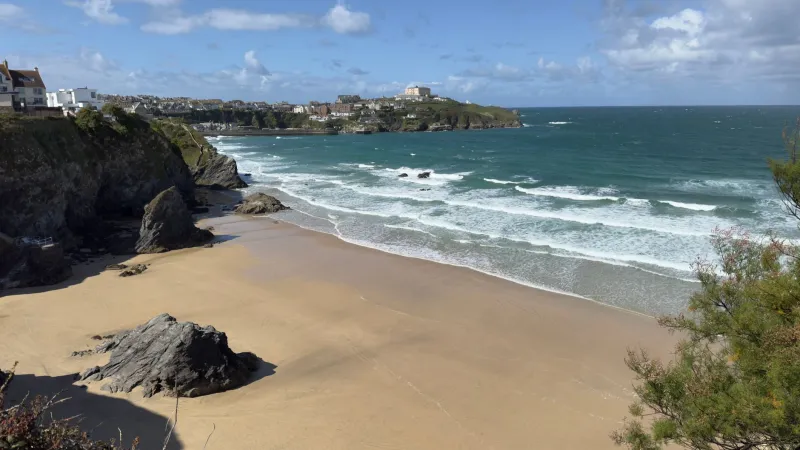
There's a version of the Polzeath family dream that looks absolutely perfect from the outside. Kids who learn to surf before they can ride a bike. School holidays spent on the beach rather than in a soft play centre off the M25. A community that still — just about — knows your name. It's the kind of life that gets shared on Instagram and quietly envied by colleagues in open-plan offices across the country.
But spend any time talking to the families who actually live here, and a more complicated picture starts to emerge. One where the tides don't care about school pick-up times, where childcare options are thinner than a spring wetsuit, and where the cost of staying can feel like it's slowly pushing you out.
The Dream, and the Reality Check
Polzeath has always attracted families. The beach is gentle enough for toddlers, the village is compact, and the sense of community that survives the tourist season is genuinely warm. But the village's growing reputation — and the property prices that have followed — have fundamentally changed who can afford to put down roots here.
Sarah, 38, moved from Bristol with her husband and two children six years ago. "We both worked remotely, so on paper it made sense," she says. "What we hadn't fully accounted for was everything else. The nearest decent secondary school is a serious drive. Childcare waiting lists are long because there just aren't that many options. And every time my mum visits from the Midlands, she asks us how we can possibly justify it."
That last point — the judgment from friends and family back home — comes up repeatedly in conversations with Polzeath parents. There's a peculiarly British discomfort around choosing to live somewhere beautiful when the finances are clearly stretched. "People assume you must be loaded," says Dan, 41, a freelance designer who relocated with his partner and their young daughter. "We're really not. We just made some very deliberate trade-offs."
What Those Trade-Offs Actually Look Like
For most families in Polzeath, the financial gymnastics are real and ongoing. Property prices in the area have climbed sharply over the past decade, driven partly by the second-home market. Renting is an option, but rental stock is limited and competition is fierce — particularly as holiday let conversions continue to reduce the pool of long-term lets available.
Schooling is a genuine practical challenge. Primary provision locally is small and well-regarded, but secondary-age children often face long commutes. Some families factor in private schooling in Wadebridge or further afield, which adds another significant line to the monthly budget. Others lean hard into home-based and outdoor learning philosophies — the beach as classroom, essentially — though that requires a particular kind of parenting confidence and flexibility.
Childcare is where things get genuinely tricky. The village's seasonal economy means that nursery and wraparound care options fluctuate. Several parents mentioned driving significant distances for reliable childcare during working hours. "In the summer it's fine because the kids are on the beach and everyone's around," says one mum who asked not to be named. "But term-time logistics are honestly exhausting."
The Ones Who Stayed, and the Ones Who Left
Not every family makes it work long-term. Several parents we spoke to had made the move to Polzeath, loved it, and then — reluctantly — moved on when the combination of costs and logistics became unsustainable. One family relocated to a larger town in North Cornwall after their eldest reached secondary school age. "We still come back every summer," the dad told us. "It's still our favourite place. We just couldn't make the numbers add up for the long haul."
But for those who've found a way to stay, the conviction is fierce. Dan's daughter is now seven and has grown up swimming in the Atlantic. "She's got a confidence around water and outdoors that I never had as a kid," he says. "I genuinely believe that changes who she'll be as a person. That's not nothing."
Sarah, meanwhile, has no plans to leave despite the pressures. "Every morning when I walk the beach before the kids are up, I think: this is worth it. But I'd be lying if I said there weren't moments — usually when a bill lands — when I wonder what we're doing."
Practical Tips for Families Thinking About the Move
If you're seriously considering relocating to Polzeath with children, a few things are worth thinking through carefully before you commit:
Do your school research early. Visit the local primary, understand the secondary options, and be honest with yourself about how you'll handle the commute years.
Map the childcare landscape before you arrive. Don't assume provision will be there when you need it. Talk to local parents and get on waiting lists as early as possible.
Build in a seasonal buffer. If your income has any flexibility, plan for the reality that term-time Polzeath is a very different place to August Polzeath. The community is tighter and warmer, but some services genuinely thin out.
Find your people. The families who thrive here tend to be deeply embedded in the local community — school gates, surf clubs, village events. The social infrastructure is there, but you have to show up for it.
Be honest about the finances. The romantic version of Polzeath life is seductive. The spreadsheet version is less so. Both need to be true at the same time.
Polzeath is, undeniably, one of the most extraordinary places in Britain to raise a child. The question isn't whether it's worth it — most of the families who live here would tell you it absolutely is. The question is whether you can make the numbers work without grinding yourself down in the process. For some, the answer is yes. For others, it's a season or two of magic followed by a pragmatic retreat to somewhere with better bus routes and cheaper rent.
Either way, the beach will still be there.