Thinking Small: How Polzeath's Tiniest Stays Became Its Most Sought-After
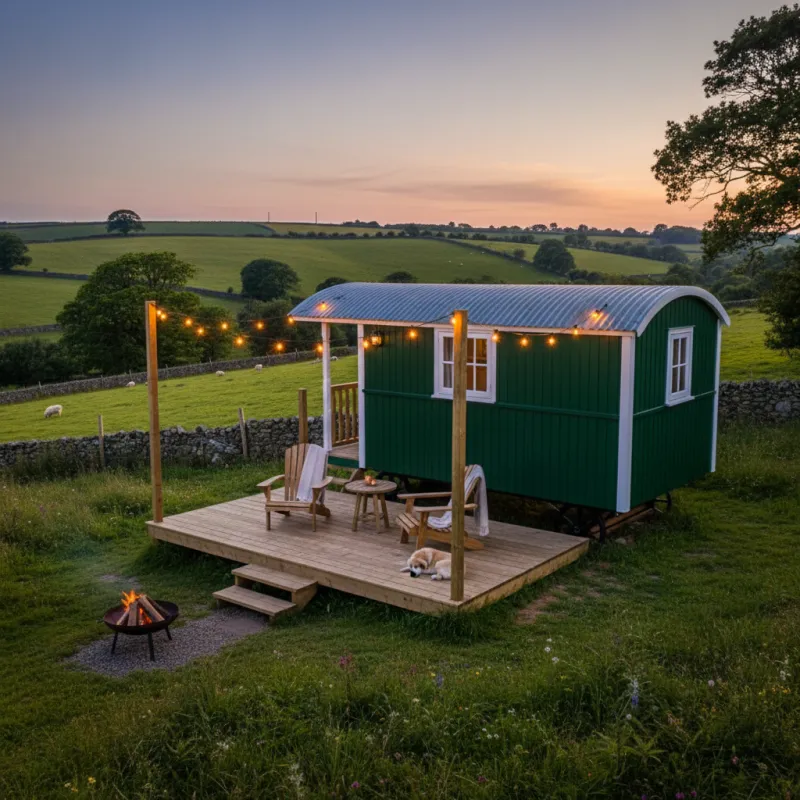
Photo: cosy shepherd's hut glamping pod Cornwall coastal, via images.campercation.com
Somewhere between a proper holiday cottage and sleeping in your car, a new category of Polzeath accommodation has been quietly taking shape. We're talking about the converted outbuildings, the repurposed shepherd's huts tucked behind garden walls, the studio annexes so compact that you can touch both walls from the bed. Micro-stays. And they're full.
If you've been browsing Polzeath accommodation recently, you'll have noticed them. Listings that describe themselves as "cosy" in a way that's clearly doing some heavy lifting. Spaces measured in feet rather than rooms. Prices that, per square metre, would make a London estate agent blush. And yet the reviews are glowing, the calendars are blocked out months in advance, and a growing number of visitors are actively seeking them out over larger, more conventional options.
So what's actually going on?
The Supply Side of the Story
Polzeath's property market has been under extraordinary pressure for the better part of a decade. House prices have climbed steeply, long-term rental stock has been steadily absorbed into the holiday let market, and the village's popularity shows no sign of cooling. For homeowners sitting on a property in one of Britain's most desirable coastal postcodes, the financial logic of converting every available outbuilding into a rentable unit is fairly compelling.
A garden shed with proper insulation, a camp bed and a kettle is not, legally speaking, a holiday let. But the line between a well-equipped "garden room" and a micro-accommodation unit has become genuinely blurry, and planning enforcement in rural Cornwall — as in most of rural England — is a limited resource. The result has been a quiet proliferation of tiny rentable spaces that exist somewhere in a planning grey area, neither fully sanctioned nor actively shut down.
More above-board versions of the same trend are also thriving. Shepherd's huts and glamping pods have become a legitimate and increasingly mainstream hospitality category, and several Polzeath-area landowners have invested properly in them — with planning permission, building regulations sign-off, and the kind of thoughtful interior design that photographs well and justifies a three-night minimum. These are proper small stays, done right.
Why Visitors Are Choosing Them
The demand side of this story is arguably more interesting. Why would someone choose to spend a long weekend in a space that's smaller than their spare room at home?
Talk to guests who've stayed in these micro-spots and a few themes emerge consistently. First, proximity. Many of the best small stays in Polzeath are in locations that larger holiday cottages simply can't offer — tucked right behind the dunes, within earshot of the beach, or in the heart of the village itself. When you're paying for a week in Cornwall, being three minutes from the water rather than fifteen genuinely matters.
Second, and perhaps more surprisingly, there's an authenticity argument. Several guests described a preference for smaller, owner-managed spaces over the more polished, agency-managed holiday lets that have come to dominate the market. "It felt like staying in someone's actual life rather than a show home," one visitor told us. "The surfboard propped against the wall, the local pub menu on the fridge. It just felt more real."
Third — and let's be honest about this — there's price. A micro-stay in a prime Polzeath location can undercut a comparable larger property by a meaningful margin, particularly for solo travellers or couples who don't need the space. In a market where even modest cottages command serious weekly rates during peak season, that differential is attractive.
The Questions Nobody's Quite Answering
For all the charm of the micro-accommodation boom, it raises some legitimate questions about what it means for Polzeath as a place.
The planning grey area is real and worth acknowledging. Structures that have been converted to accommodation without proper consent can create problems for guests (insurance voids, for instance) and for neighbours who've watched the character of their street quietly change. Several local residents we spoke to expressed frustration at the pace of change, and the sense that planning rules were being stretched rather than followed.
There's also a broader question about what this trend reveals about the village's trajectory. On one reading, micro-stays are a creative, entrepreneurial response to a constrained housing market — making the most of what's there, offering new and different visitor experiences. On another, they're a symptom of a housing landscape so distorted by tourism demand that people are renting out sheds, and visitors are grateful for them.
Both readings can be true simultaneously, which is sort of the point.
What to Look For If You're Booking One
If the micro-stay concept appeals — and for the right kind of trip, it genuinely should — a few things are worth checking before you commit.
Ask about planning and building regulations. A legitimate, properly converted space should have documentation. If the listing is vague about this, it's worth asking directly.
Read reviews carefully for the space, not just the location. A five-star review that talks exclusively about the beach and the sunset is not the same as one that confirms the heating works and the bed is comfortable.
Be honest about what you need. Two adults who want to surf all day and sleep soundly at night can be perfectly happy in a small, well-equipped space. Two adults who want to cook elaborate meals and spread out with laptops probably need something bigger.
Check what's actually included. Micro-stays can vary wildly in what they offer. Some are genuinely fully equipped; others are closer to a dry place to sleep. Know which one you're booking.
Polzeath's micro-accommodation scene is scrappy, inventive, occasionally questionable, and often surprisingly brilliant. Much like the village itself, really.