Working in Paradise, Living Nowhere Near It: Polzeath's Hidden Housing Crisis
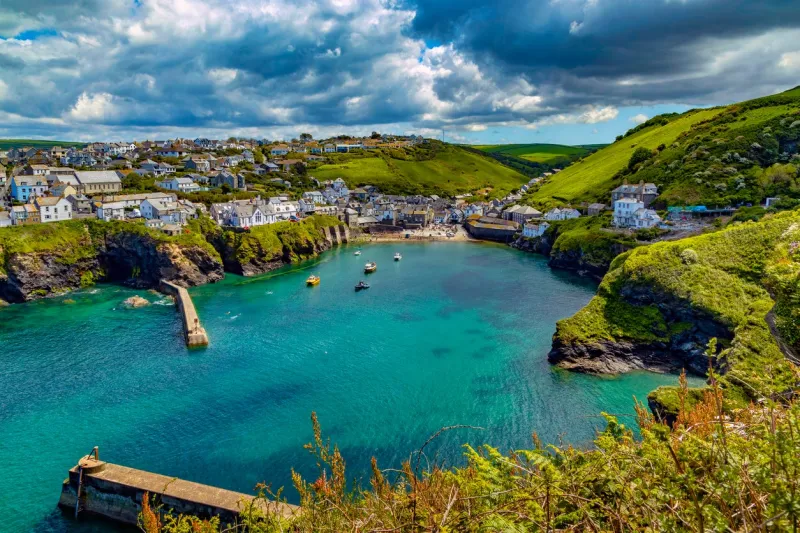
Photo: Cornwall village worker commuting coastal town housing, via static.independent.co.uk
It's a Tuesday morning in late June. The car park at Polzeath beach is already half full by nine o'clock, the surf school vans are lined up along the road, and the smell of fresh pastries drifts out from the café on the corner. Everything looks exactly as it should. Idyllic, even.
But ask the woman behind the coffee counter where she lives, and the picture shifts. "Bodmin," she says, without missing a beat. "Forty minutes each way. I've been doing it three years now." She's been trying to find somewhere closer the whole time. "There's just nothing. Or if there is, it's gone within hours — and it's a holiday let by the following week."
This is the other side of Polzeath. Not the side that makes it onto travel blogs or surf vlogs. The side that keeps the whole place running, quietly and at considerable personal cost.
A Village That Can't House the People Who Serve It
Polzeath's appeal is no mystery. A north-facing beach that catches Atlantic swells, a compact village atmosphere, and a sense of belonging that draws people back year after year. Demand for holiday accommodation here has surged — and with it, the financial logic of converting long-term rentals into short-term lets has become almost irresistible for landlords.
The numbers tell a stark story. Across North Cornwall more broadly, the proportion of private rented homes listed on short-term platforms has more than doubled in the past five years. In a village the size of Polzeath, even a handful of conversions tips the balance significantly. What was once a modest but functional private rental market has effectively dried up.
For seasonal workers, the situation is particularly acute. Surf instructors, café staff, shop assistants, lifeguards — many of whom earn close to minimum wage during a season that rarely stretches beyond six months — are competing for accommodation in a market priced for holiday budgets, not local wages.
"I looked at one place last spring," says a surf instructor who's worked at one of the village's schools for four seasons. "Nice enough. Two-bed flat, about a mile from the beach. The landlord wanted £1,400 a month on a long-term let. On what I earn? That's just not realistic." He now shares a house in St Minver with two other people from the industry. It works, he says, but it's not sustainable long-term. "You start to wonder how many more seasons you've got in you before you just give up and go somewhere else."
The Maths Simply Don't Add Up
It's worth being clear about why landlords are making this shift — and to be fair, it's not hard to understand. A well-presented two-bedroom property in Polzeath can generate upwards of £1,500 to £2,000 per week during peak summer. Even accounting for gaps, cleaning fees, and platform commissions, the annual return from short-term letting can dwarf what a long-term tenancy would bring in. For property owners trying to cover mortgages that reflect today's inflated valuations, the decision makes cold financial sense.
But the cumulative effect on the village is corrosive. When the people who staff the restaurants, manage the surf hire sheds, run the beach safety operation, and keep the local shop open can't afford to live within 15 miles of their workplace, the whole ecosystem starts to strain.
One hospitality manager who oversees a team of twelve during peak season describes the logistics of it as "a staffing nightmare that never quite goes away." Three of her team commute from Wadebridge. Two more drive in from Camelford. "I've had people drop out mid-season because the commute costs were eating into their wages so badly it wasn't worth it," she says. "And then I'm scrambling."
The Commuter Belt That Shouldn't Exist
There's something quietly absurd about the geography of it. Polzeath sits at the end of a single-track lane, surrounded by farmland and coast path. It was never designed to be a commuter destination. And yet, increasingly, that's what it's become — not for people commuting out to work, but for people commuting in to serve the visitors who've displaced them.
The roads around Rock and Polzeath on a summer morning are bumper to bumper with vans, bikes strapped to rooftops, and families in SUVs. Tucked in among them are the people who work here, arriving from Bodmin, Launceston, Bude — sometimes further. The irony isn't lost on the workers themselves.
"The people staying in the village are on holiday," says one shop assistant who's worked the same summer position for three years. "They're relaxed, they're spending money, they're having a brilliant time. And I'm genuinely happy for them. But I've driven 45 minutes to get here, I'll drive 45 minutes home, and I'm earning £11.50 an hour. Something doesn't add up."
What Could Actually Change Things
Across Cornwall, there's growing pressure on local councils to act. The government's introduction of a registration scheme for short-term lets in England — announced in 2023 — was welcomed cautiously by housing campaigners, though many argue it doesn't go far enough without accompanying planning restrictions.
Some Cornish parishes have begun pushing for Article 4 Directions, which would require planning permission to convert a residential property to a short-term let — effectively giving councils more control over the local housing mix. Progress has been slow, but the direction of travel is at least shifting.
Meanwhile, community land trusts and rural housing associations are exploring models that could deliver genuinely affordable homes for local workers in villages like Polzeath — but these are long-term solutions to a problem that's already acute.
For the people driving in from Bodmin and Wadebridge every morning, waiting for policy to catch up feels like a luxury they don't quite have.
The Village Needs Its People
There's a version of Polzeath's future where the village remains exactly as beautiful as it is now — the beach, the waves, the light on the estuary at low tide — but where the community that gives it warmth and character has quietly hollowed out. Where every face you see behind a counter is a stranger to the place, passing through for a season before the economics push them somewhere else.
That's not inevitable. But it requires people — visitors, property owners, and policymakers alike — to take seriously the idea that a village is more than its postcard image. That the barista, the lifeguard, the surf instructor, and the shop assistant aren't just service providers. They're the reason Polzeath feels like somewhere worth coming back to.
The waves will always be there. Whether the community will is a rather more open question.